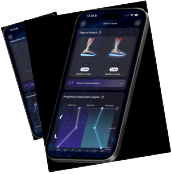
Podiatry · Clinical Applications

Stop diagnosing a dynamic problem from a static foot.

Most of what walks into your clinic is a movement problem — but you assess it sitting still. Baliston Health gives you the dynamic data that completes the picture: capture in 3 minutes, decide with confidence, track over time, document for everyone who needs the report.

Podiatry-ready dynamic gait workflows
30+ biomechanical parameters per assessment
CE & FDA cleared
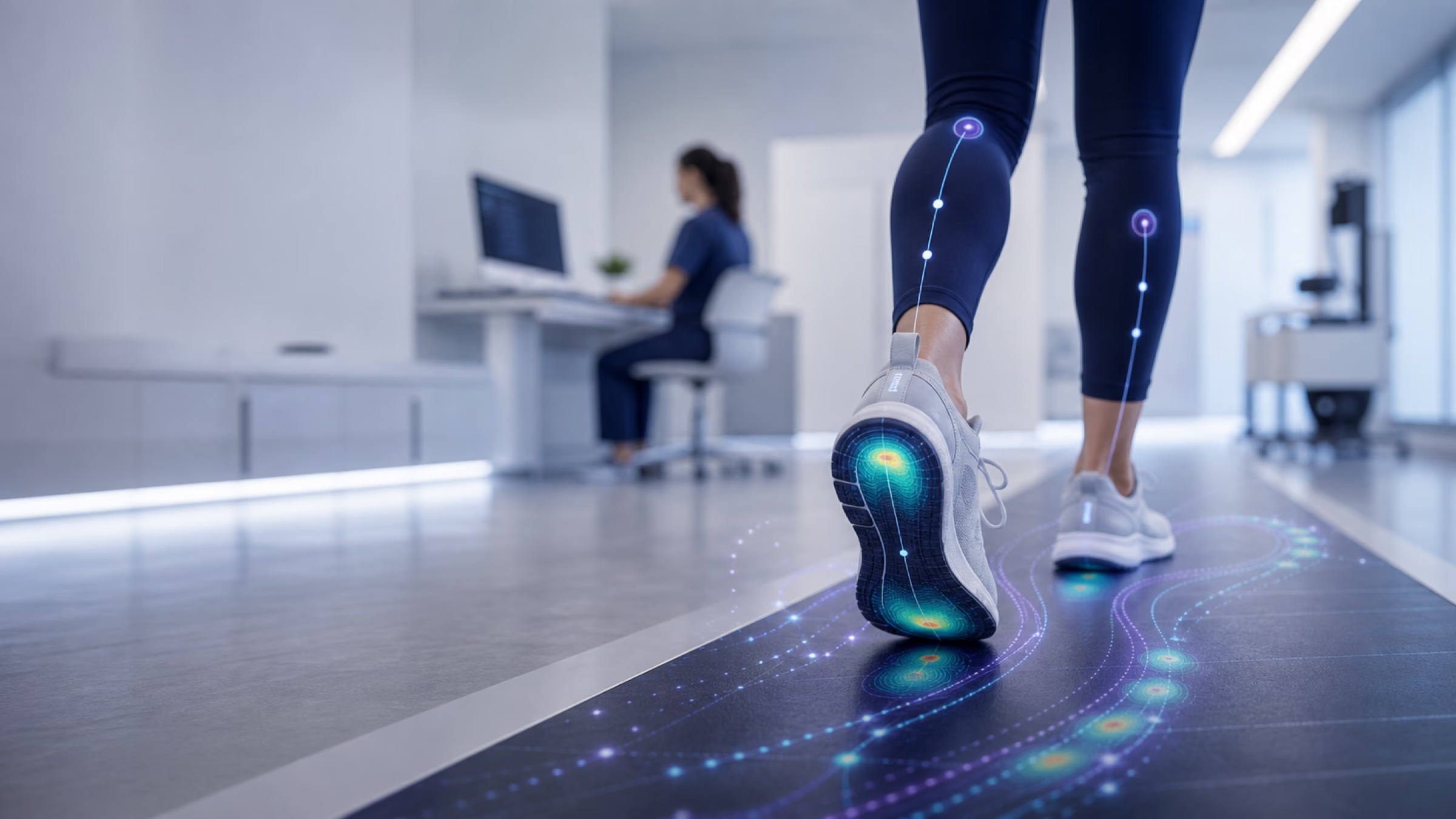
Patient walking with sensorized insoles in a podiatry gait assessment
3 minNatural walking capture
30+Biomechanical parameters
Bal AIClinical interpretation layer
What Baliston does for podiatry

Four jobs you do every day. Sharper, faster, more defensible.

Across every podiatric visit — diagnostic, treatment, follow-up — the underlying clinical work is the same. Baliston Health gives you measurable, repeatable, comparable data for each step.

Use

A full assessment in three minutes — no extra staff, no extra equipment, no learning curve.

Baliston Health is designed to fit how a podiatry visit actually works — between the static exam and the treatment decision. No additional appointment. No separate room. No protocol training.

Step 01 · Insert

Insert the connected insole.

The AI Mov-Scan insole goes in the patient's own shoe — over their existing orthotic if relevant. No setup, no calibration, no markers. The patient stays in their normal footwear.

Step 02 · Walk

One minute of natural walking.

The patient walks normally in your treatment room — overground, no treadmill required. AI Mov-Scan captures motion data continuously, and Bal AI begins translating it into clinical signal in real time.

Step 03 · Read

Read what the data — and Bal AI — surfaces.

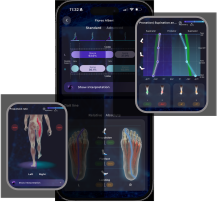
30+ biomechanical parameters, structured into a visual report. Bal AI cross-references the new session against the patient's history and surfaces the patterns worth your attention — for you to interpret, validate, and act on.

2,000/secMotion samples
30+Validated parameters
<3 minPer assessment
95%Agreement vs. optical motion capture (peer-reviewed, Sensors)
Pathology Cases

Five common podiatry cases. Five real Bal AI conversations.

Click any card to see how Bal AI handles a case you treat regularly — a real question, a real answer, in seconds. Same platform, same clinical reasoning, scripted from real Baliston Health output.

Analyses

Walk · Run.
The two analyses that cover virtually every podiatry case.

Every Baliston Health deployment runs the same software platform — but for podiatry, the analyses you actually use are concentrated. Walk is the foundation for diagnosis, treatment response, and longitudinal tracking. Run matters for runners and running-related podiatry. The platform's Jump module is designed for athletic return-to-play decisions and isn't part of a typical podiatry workflow.

Walk analysis app interface
Card 1 · Walk
Walk
Best for

The foundation of podiatric practice — initial assessment, treatment response tracking, post-orthotic comparison, longitudinal patient records, surgical follow-up.

What it captures
  • Foot dynamics — pronation, supination, strike pattern, contact stability
  • Loading distribution — left/right, fore/rearfoot, stance phases
  • Symmetry indices — loading, propulsion, stance, swing
  • Stride quality index
  • Cadence, stride length, stance and contact time
Who uses it most

Every podiatry practice. The foundation for diagnosis, treatment planning, and follow-up across virtually every case in this page.

Included with every deployment
Run analysis app interface
Card 2 · Run
Run
Best for

Running-related podiatry — runners with overuse injuries, plantar fasciitis in athletic populations, running shoe and orthotic prescription, return-to-running progression.

What it captures
  • Stride symmetry and cadence consistency at running pace
  • Propulsion and contact-time analysis under impact
  • Landing mechanics and shock absorption
  • Pre/post-fatigue comparison
  • Running-specific asymmetries that don't appear at walking pace
Why it matters for podiatry

Most foot conditions in athletic populations don't show their full pattern at walking pace. The deficits, asymmetries, and overload patterns that drive plantar fasciitis, Achilles tendinopathy, and stress reactions show up clearly at running pace — and Run analysis catches them.

Who uses it most

Sports podiatry, running-specialty practices, multi-disciplinary clinics serving athletic populations.

Add-on for the AI Mov-Scan Kit · Included with Gait Lab Mini and Gait Lab

Most podiatry practices start with Walk — and add Run as their athletic caseload grows. A 30-minute conversation with our team will get you to the right configuration faster than a comparison table will. Talk to sales →

Evidence & Adoption

Used by podiatrists who decided gait data was no longer optional.

Built for podiatry teams using movement data in daily practice — for diagnostic decisions, treatment response tracking, and the patient and referrer reports that follow.

30+
Biomechanical parameters per podiatry assessment
95%
Agreement with optical motion capture
Peer-reviewed, Sensors

Baliston changes the patient conversation. Instead of explaining what I think is happening from a static exam, I can show how the foot behaves under load and use that data to guide the treatment plan.

Podiatry clinical lead
Foot & ankle practice · Baliston partner clinic
Trusted by podiatry clinics, foot & ankle groups, and academic programs

See it on a podiatry case.

The fastest way to evaluate Baliston Health is to see it run on a patient who already walks through your clinic.

Book a demo
30 minutes. Three real podiatric cases.

We'll walk you through three real podiatric cases — including one where dynamic data shifted the working diagnosis.

Book the demo
Talk to sales
Multi-location, partnership, or institutional.

For multi-location practices, lab partnerships, or institutional deployments — let's start with a conversation.

Talk to sales
Download the podiatry case study