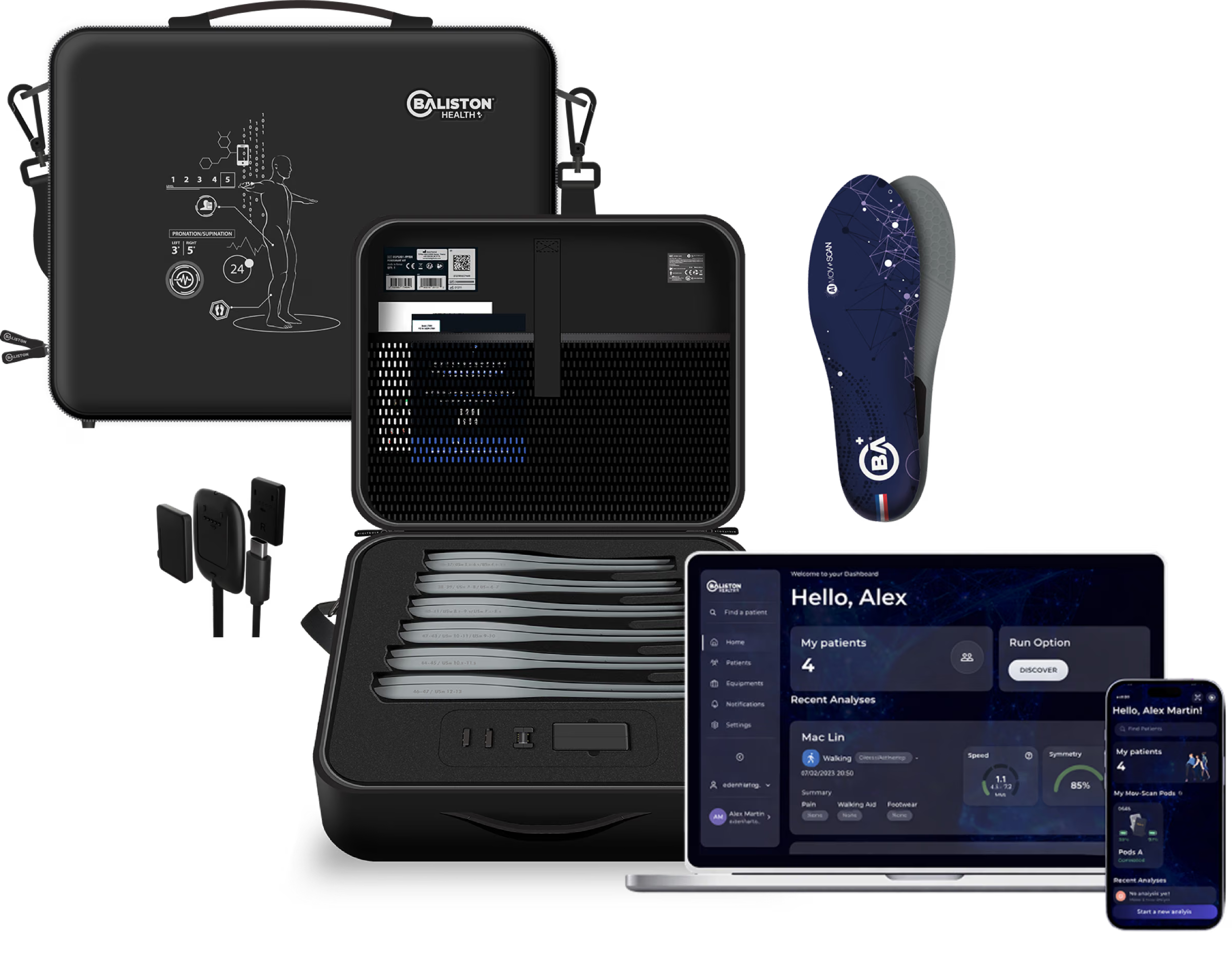
Capture
Sensor data
AI Mov-Scan captures movement in natural footwear during the clinical visit.
Every clinician in motion-affected care — from podiatry to neurology to performance — has spent their career watching how people move and making decisions on what they see. Baliston Health is the platform built to give those decisions the data they deserve.
Mobility is the foundation of human health. How we move predicts how we age, how we recover, how we live. Clinicians have known this for decades.
But the tools to actually analyze mobility have been stuck — expensive cameras, restrictive labs, subjective assessments built around symptoms rather than causes. Most clinicians measure what they can see, then treat what they can measure. The underlying pathology — the why behind the limp, the asymmetry, the decline — stays out of reach.
At Baliston Health, we believe measuring mobility isn't enough. The goal is to analyze the underlying pathology that drives it. To turn the sixth vital sign into something every clinician can quantify, compare, and act on — not just observe.
The platform pairs AI Mov-Scan — a connected sensor that captures motion at clinical-grade precision — with Balia, the conversational AI assistant that helps clinicians turn that motion into the decisions they actually make.
We built it to fit how real clinical visits actually work. Three minutes of natural movement. No additional staff, no separate room, no learning curve. The data that's been hiding in plain sight, finally on the screen.
Today, Baliston Health is built around a movement dataset spanning 250M+ steps across 50+ countries, representing 400B+ movement data points captured and translated into practical clinical insight.
In-shoe sensors translate natural walking, running, and jumping into clinical-grade movement data without changing the patient workflow.
Balia reads the session against patient context, highlights what matters, and keeps the practitioner in control of the decision.
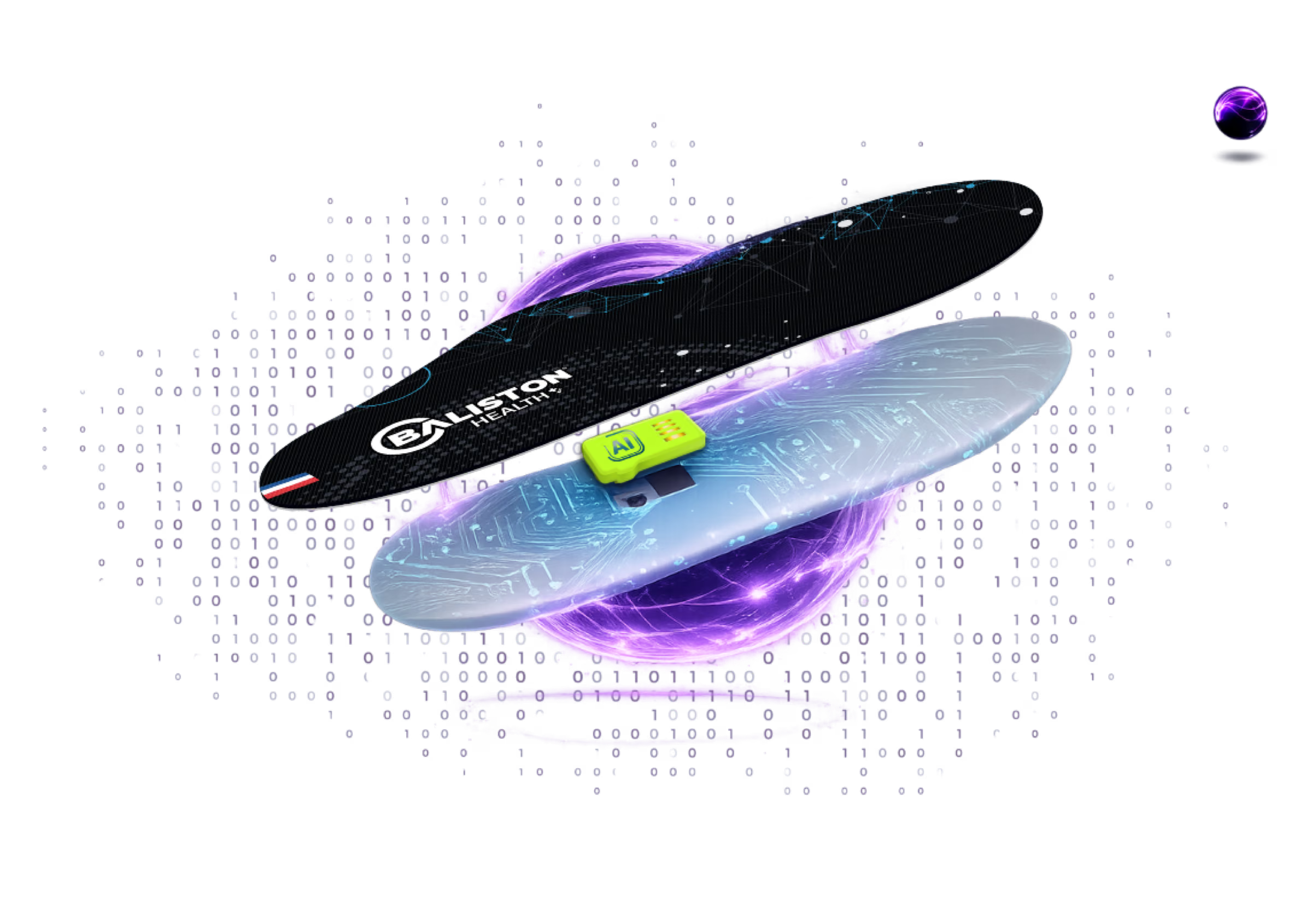
AI Mov-Scan captures movement in natural footwear during the clinical visit.
Raw motion is cleaned, structured, and converted into clinical movement parameters.
Patterns, asymmetries, risk indicators, and progress signals are brought forward.
Balia supports the clinical conversation while the practitioner keeps the decision.
The team brings together expertise in clinical movement science, biomechanics, software engineering, connected footwear, and product design. The profiles below use the same team photography and information from the public Baliston About page.




These figures use the same data points currently used across the Baliston Health website.
We build for clinicians, not around them. Balia surfaces patterns and suggests directions; the clinician decides. Every output is cited, every suggestion qualified for clinical review, every report designed to support — not bypass — the practitioner's judgment.
We measure ourselves against three things: accuracy (the data has to be true), adoption (the platform has to be used in real practice, not just admired in pilots), and defensibility (every decision the platform supports has to hold up to scrutiny — clinical, regulatory, and procurement).
We are not building toward autonomous clinical AI. We are building toward something more useful and more honest: a platform that gives every clinician working in motion-affected care the data their judgment deserves, fast enough to fit the visit they actually have.
Whether you're a clinician evaluating the platform for your practice, a journalist working on a story, a researcher exploring collaboration, or someone considering joining the team — we'd rather hear from you directly than send you to a form.
The clearest way to evaluate Baliston Health is to see it run on cases relevant to your specialty.
Book a demo →Partnerships, press, research collaboration, careers, or general questions — start with a conversation.
Get in touch →