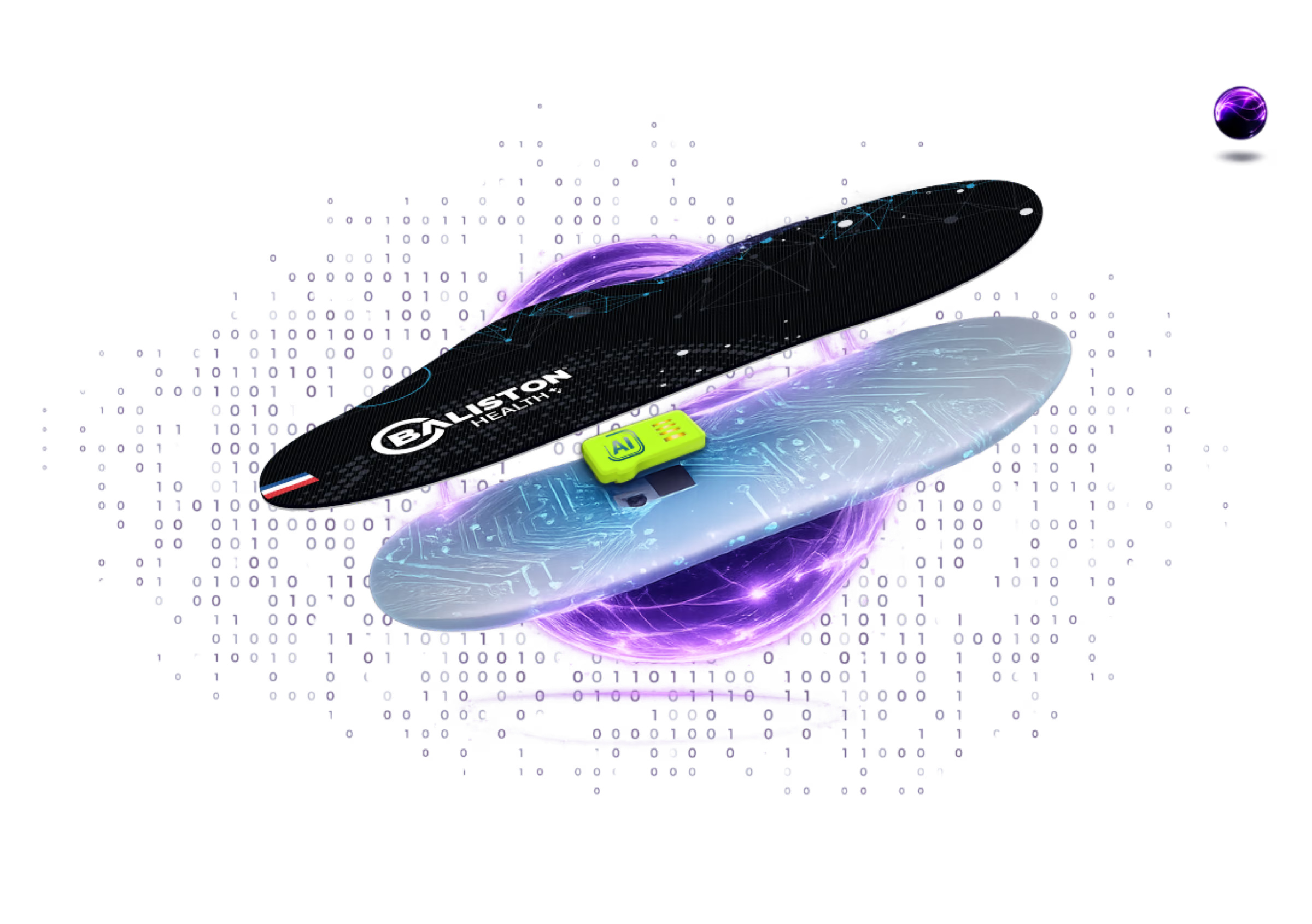
How It Works

The first AI Practitioner Assistant
built for the practitioner.

Two integrated AI tools — AI Mov-Scan and Bal AI — turn three minutes of walking into clinical insight. Designed in clinic, validated in research, deployed across [X]+ practices in 5 specialties.

Unparalleled
accuracy

Research-Grade Sensors

The platform fuses miniaturised inertial sensors with proprietary deep-learning models — delivering lab-grade biomechanics outside the lab.

  • 1,000 Hz capture of full-body biomechanics from a 5-gram in-shoe sensor pod
  • Validated against 3D motion capture and force plate ground truth in peer-reviewed studies
  • CE marked, FDA registered, and developed under global clinical safety standards
  • Trained on the world's largest real-world gait dataset — 200M+ steps, 400B+ data points
95%
Gait Symmetry Accuracy
vs. optical motion capture, Sensors Journal
200M+
Steps analyzed
across 50+ countries
CE · FDA
Certified & Registered
CE marked Class I medical device · FDA registered
One platform, two pillars

A sensor that sees movement.
An intelligence that reads it.

The platform is built on the tight integration of two AI tools that share one purpose — give the practitioner objective movement data, structured into clinical insight, in seconds. AI Mov-Scan captures and translates the movement. Bal AI interprets it.

The Sensor
The sensor that sees and translates movement.

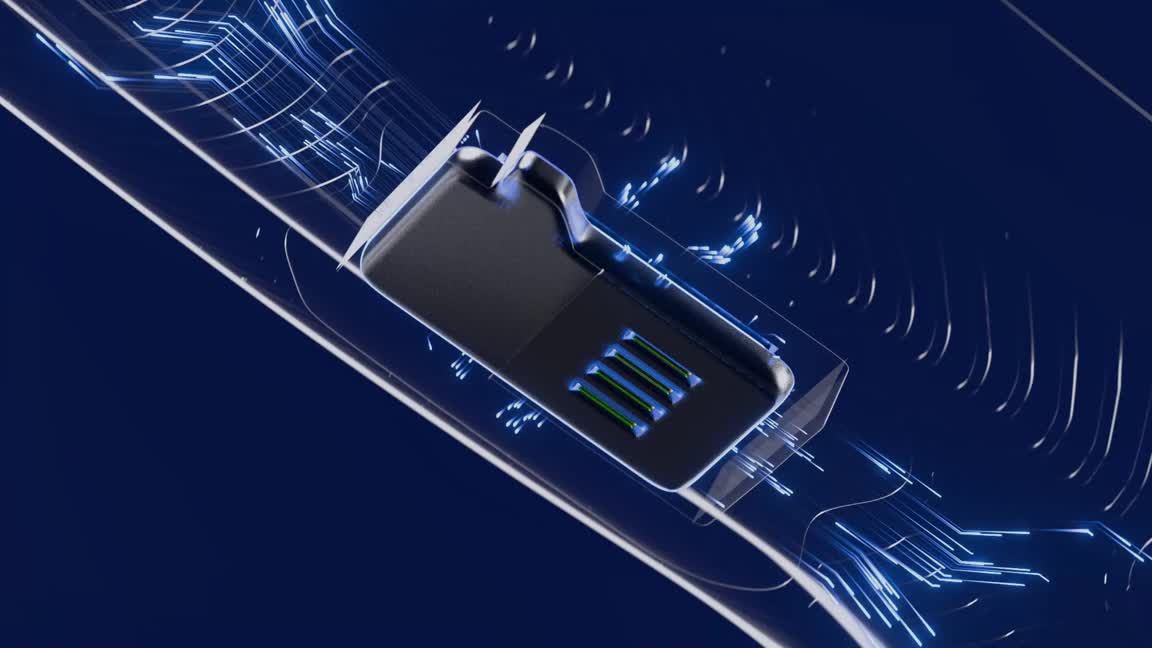
A connected insole with an on-device AI chip. Captures acceleration and orientation at clinical-grade precision — and translates raw motion into 30+ validated biomechanical parameters in real time, on-device.

  • Real-world capture in the patient's own shoe
  • 2,000 motion samples per second per foot
  • 30+ validated biomechanical parameters per session
The Intelligence
Bal AI
The intelligence that reads movement.

A clinical decision-support layer that cross-references AI Mov-Scan data with patient history and reported symptoms — surfacing evidence-based correlations and suggested care pathways for the practitioner to validate.

  • Cross-references the data against the patient's full history
  • Surfaces patterns associated with 20+ mobility-linked conditions
  • Suggested care pathways, cited and reviewable
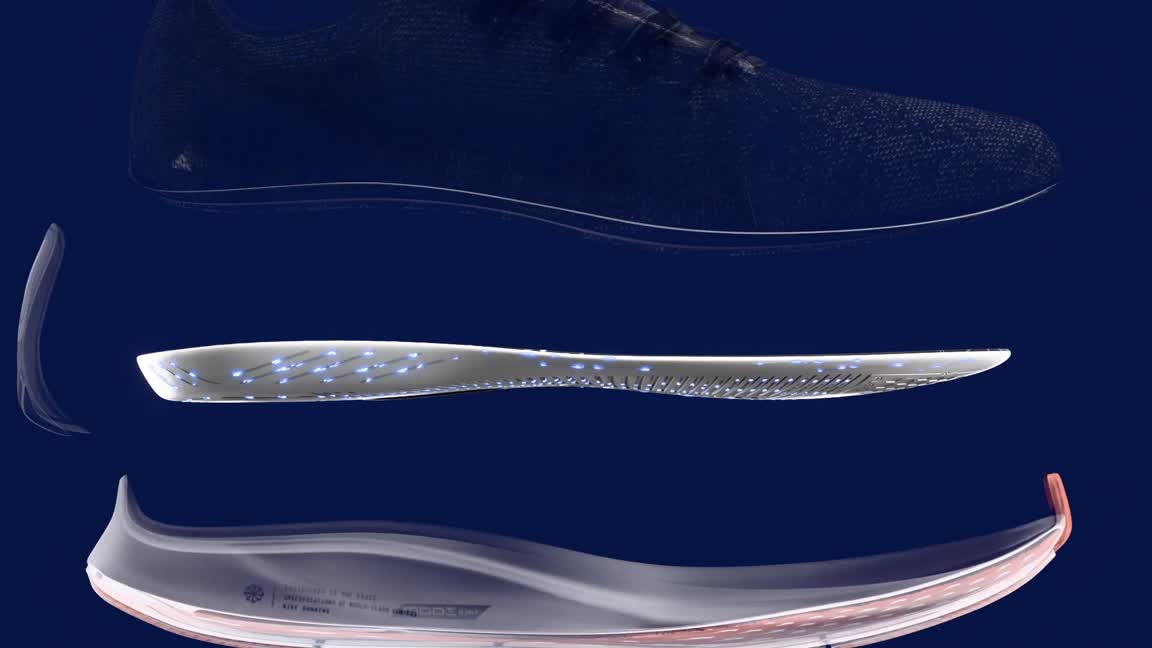
01 — THE SENSOR

AI Mov-Scan. The connected insole.

The hardware that turns three minutes of movement into clinical-grade data.

02 — INSERT

Slide it in. The patient's normal footwear.

No setup. No calibration. The visit continues as planned.

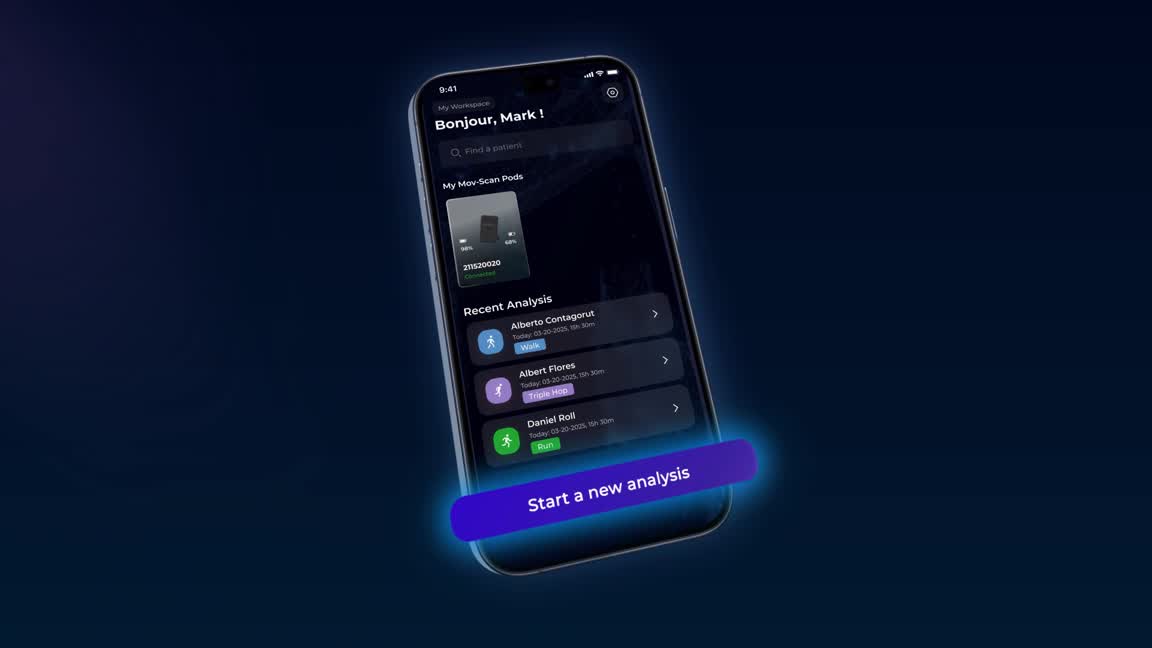
03 — ASSESS

Open the app. Walk. Run. Jump.

No treadmill. No markers. No separate room.

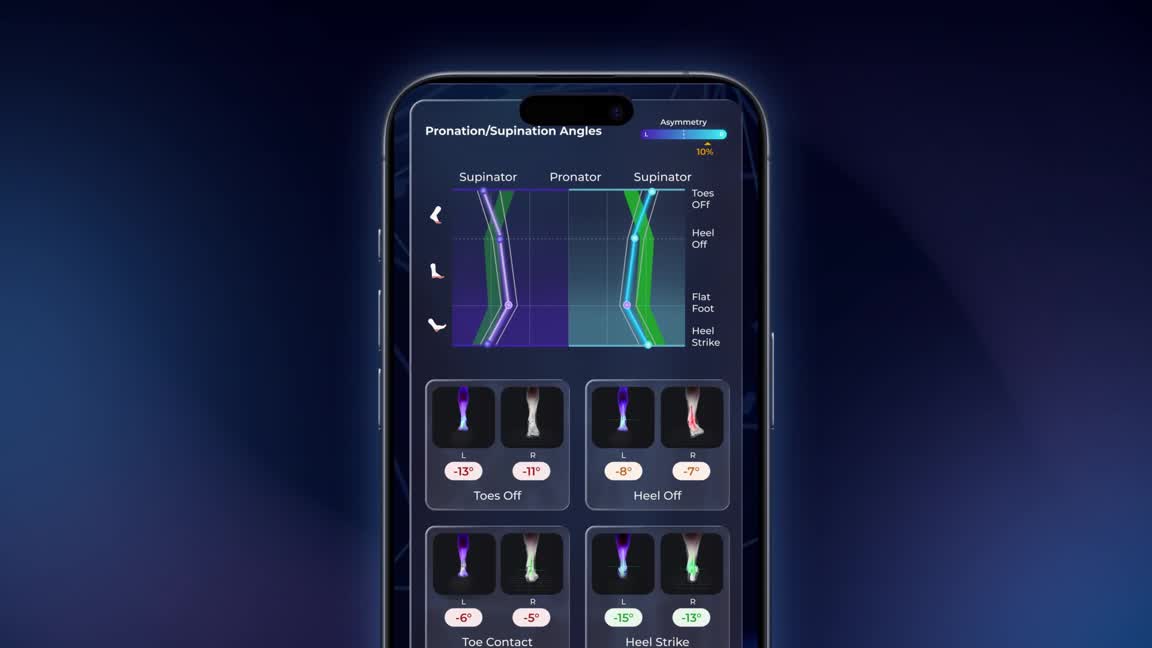
04 — REPORT

30+ parameters. On your phone.

The session, distilled. Sharper assessment, clearer treatment path, in seconds.

Show it to the patient. Watch the conversation change.

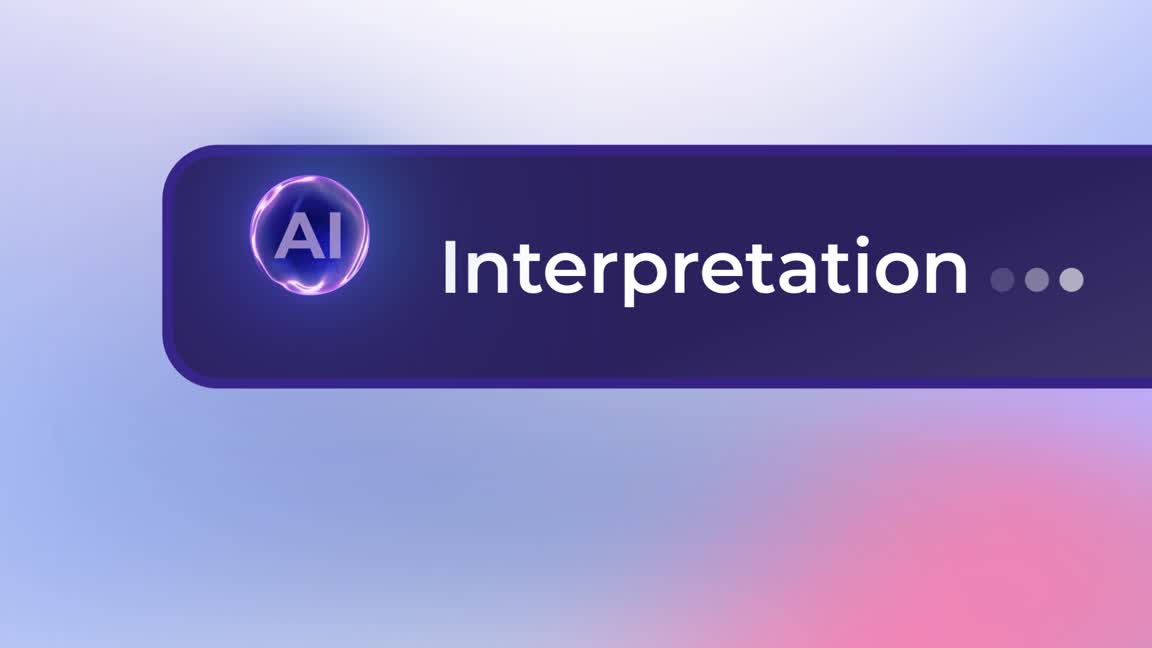
05 — INTERPRET

Ask Bal AI. What does the data say?

Cross-references the session against the patient's history. Surfaces what matters. Hands the decision back to you.
Loading frames 0%
AI Mov-Scan connected insole
01 — THE SENSOR

AI Mov-Scan. The connected insole.

The hardware that turns three minutes of movement into clinical-grade data.

AI Mov-Scan inserted into normal footwear
02 — INSERT

Slide it in. The patient's normal footwear.

No setup. No calibration. The visit continues as planned.

Baliston app movement assessment
03 — ASSESS

Open the app. Walk. Run. Jump.

No treadmill. No markers. No separate room.

Clinical report on a phone
04 — REPORT

30+ parameters. On your phone.

The session, distilled. Sharper assessment, clearer treatment path, in seconds. Show it to the patient. Watch the conversation change.

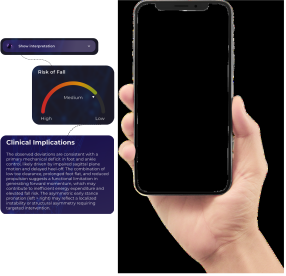
Bal AI interpretation interface
05 — INTERPRET

Ask Bal AI. What does the data say?

Cross-references the session against the patient's history. Surfaces what matters. Hands the decision back to you.

What We Analyze

Every deployment runs the same platform — but the analyses you can run depend on what your patients do. We currently support four movement families, each with validated protocols and specific clinical use. New analyses are added continuously.

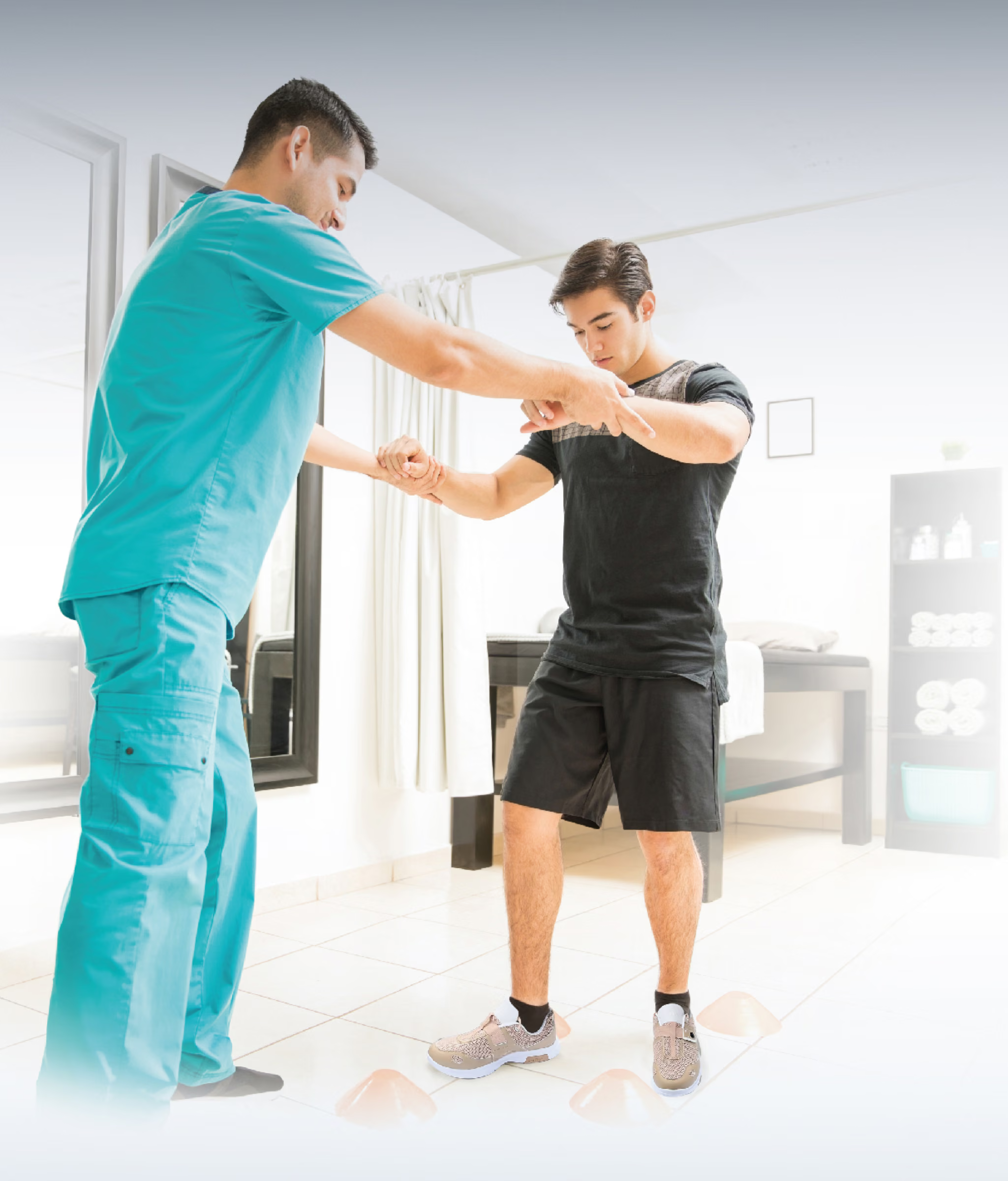
Practitioner guiding a patient through a walking assessment
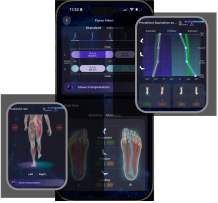
Walk analysis app screen
Clinic capture
Walk
Biomechanical assessment, captured in clinic in three minutes.

The platform's foundational analysis. Captures acceleration and orientation across natural overground walking — translated into objective biomechanical data the practitioner can compare across visits, sides, and sessions.
What it measures
  • Foot dynamics — pronation, supination, strike pattern, contact stability
  • Joint loading distribution — left/right, fore/rearfoot, stance phases
  • Symmetry indices — loading, propulsion, stance, swing
  • Stride quality index
  • Cadence, stride length, stance and contact time
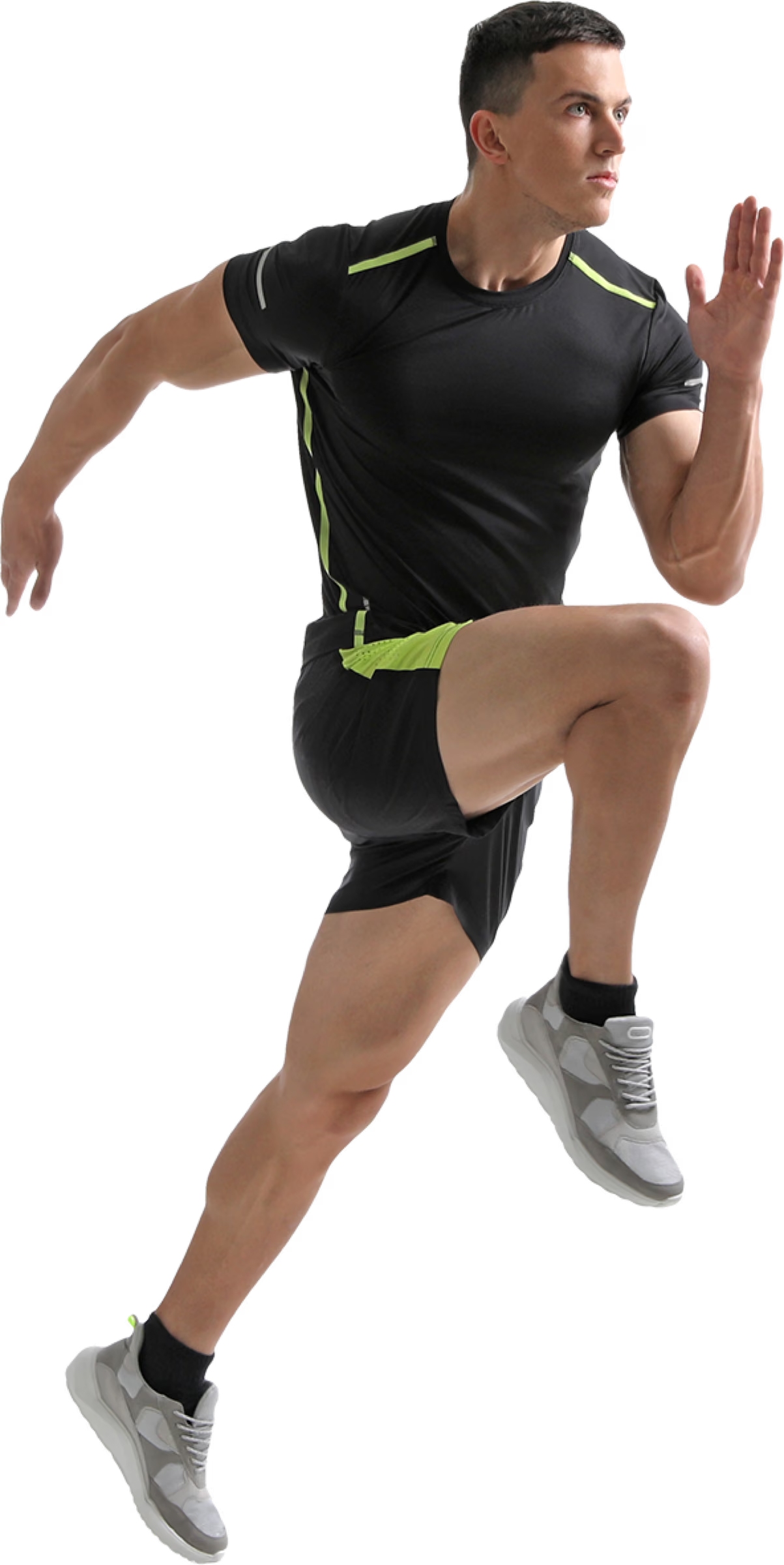
Runner with biomechanical performance overlays
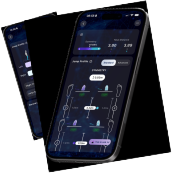
Run analysis app screen
Run mechanics
Run
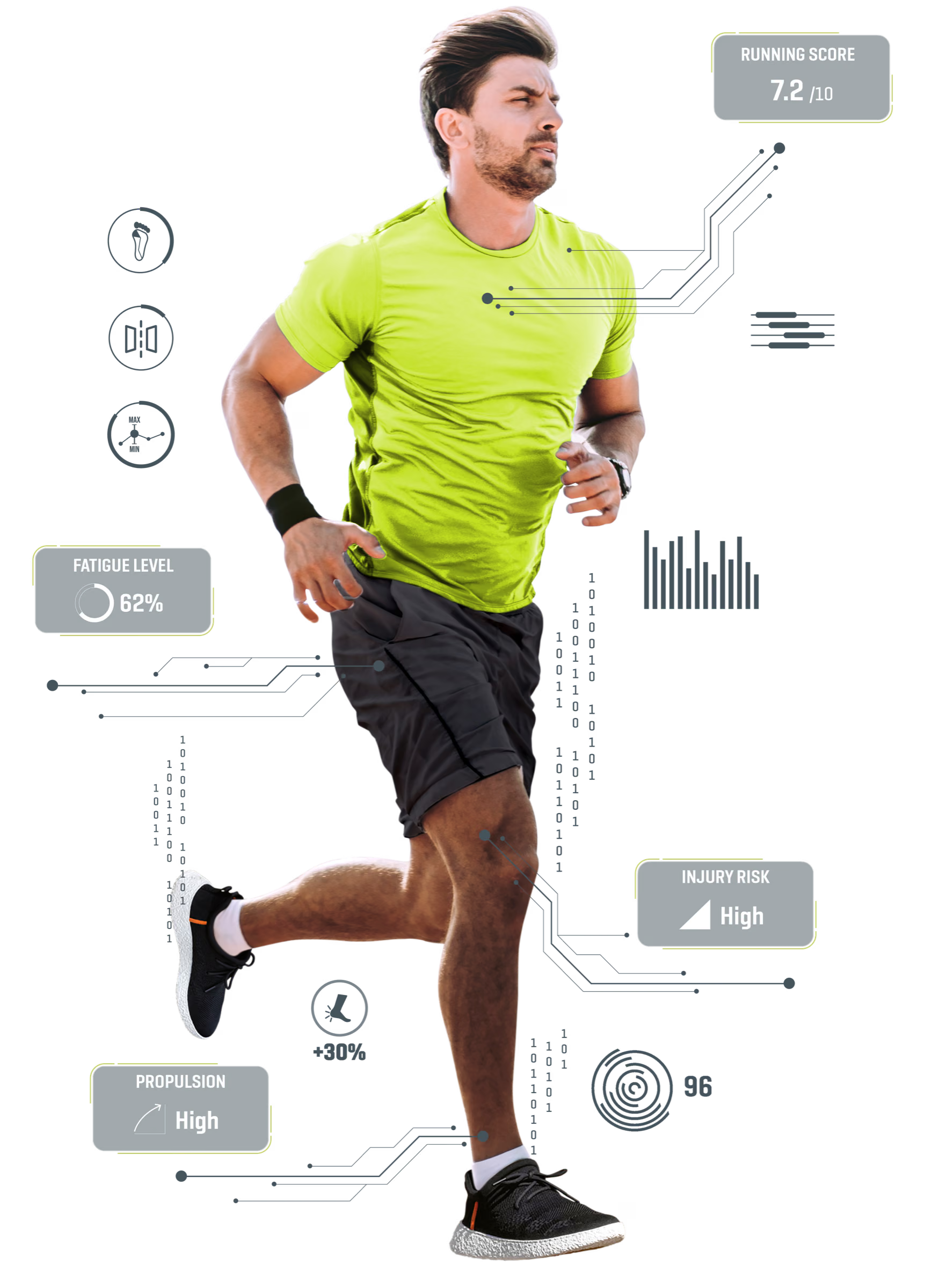
Running mechanics, captured in your patient's own shoes.

Stride efficiency, cadence, propulsion, and impact dynamics — assessed during natural overground or treadmill running. Designed for sports medicine, performance staff, and running-focused clinics.

Validated outputs
  • Stride symmetry and cadence consistency
  • Propulsion and contact-time analysis
  • Landing impact and shock absorption
  • Running economy markers
  • Pre/post-fatigue comparison
Athlete performing a jump assessment
Jump analysis app screen
Jump protocol
Jump
Four hop and jump protocols for return-to-play decisions.

The platform's most data-rich analyses. Validated protocols capture take-off, flight, and landing dynamics — the metrics that drive RTP decisions and pre-season screening.

Validated protocols
  • Counter Movement Jump (CMJ) — explosive lower-limb power
  • Single Hop Test — unilateral power and landing control
  • Triple Hop Test — fatigue-resistance and asymmetry under load
  • Side Hop Test — frontal-plane stability and reactive control
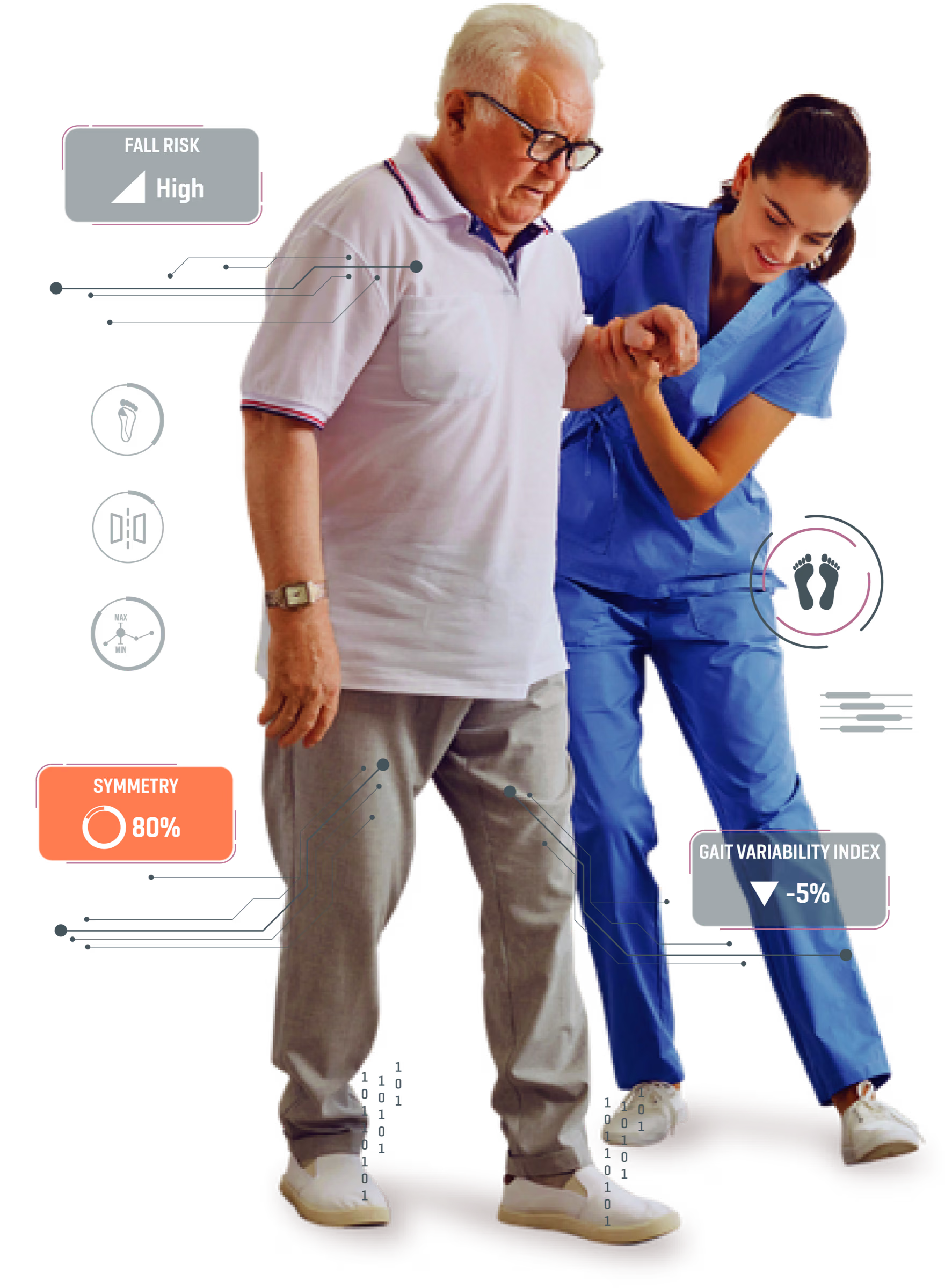
Elderly patient supported during neurological gait assessment
Neuro analysis app screen
Neuro gait
Neuro
Clinical interpretation for neurological and aging populations.

Specialized analyses that turn walking data into the markers neurologists and geriatricians actually use. Adapted for patients with frailty, walking aids, or slow gait — focused on what changes over time, and what those changes mean.

Validated outputs
  • Gait Variability Index (GVI) — quantified gait variability, benchmarked
  • Pathological gait recognition — neurological and aging patterns
  • Fall risk indicators — step width variability, push-off, balance
  • Visit-over-visit motor change tracking
  • Longitudinal progression and treatment-response monitoring
The Hardware

Three deployment tiers.

Every deployment runs the same platform, the same Bal AI, and the same validated AI Mov-Scan sensors. What changes is the form factor — sized to fit how your practice actually works.
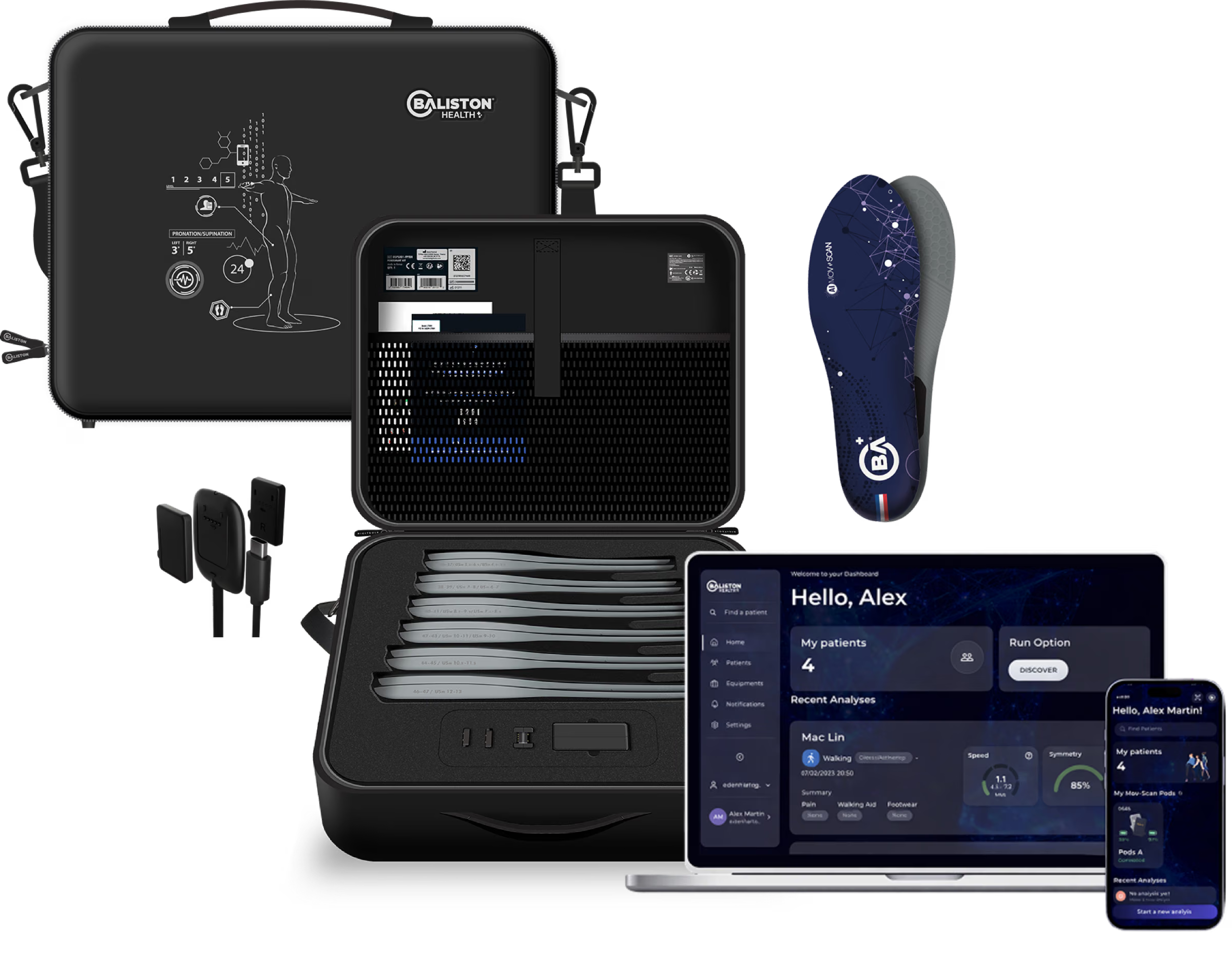
01 Kit
AI Mov-Scan Kit

AI Mov-Scan Kit

AI Mov-Scan Kit — suitcase, pods, insoles

Best for
Individual practice · podiatrist · PT · orthopedist
What's inside
  • 1 pair of AI Mov-Scan pods + transport suitcase
  • Insoles in standard size range
  • Full platform · 3-year license
02 Kiosk
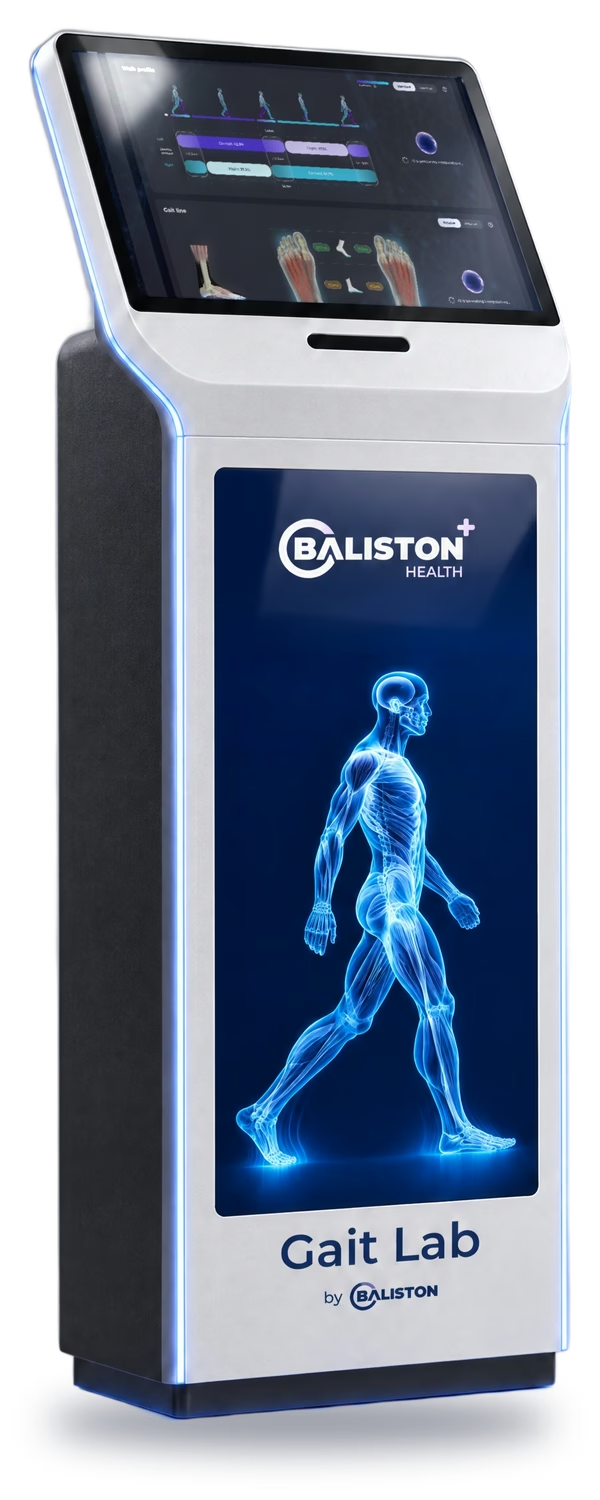
Gait Lab Mini — portable AI kiosk

Gait Lab Mini

AI Kiosk — standalone touchscreen station

Best for
Sports retail · large clinic · rehab center
What's inside
  • 3 pairs of AI Mov-Scan pods
  • Standalone kiosk with integrated touchscreen
  • Full platform · subscription model
03 Station
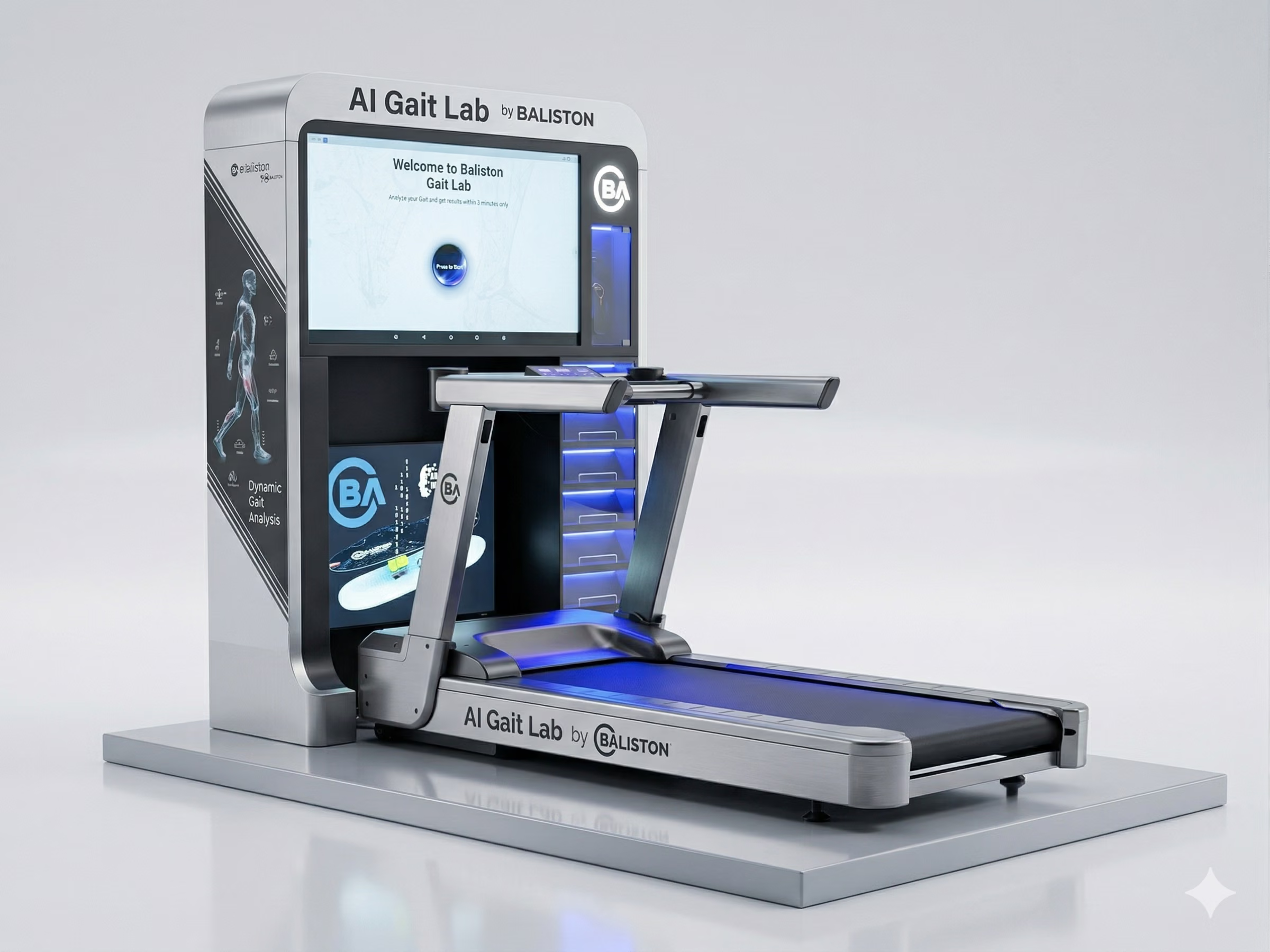
Gait Lab — full station

Gait Lab

Full station — treadmill, large display, kiosk

Best for
Premium clinics · specialized centers · hospitals
What's inside
  • 3 pairs of AI Mov-Scan pods
  • Integrated treadmill, large display, kiosk
  • Installation, maintenance, multi-user support
Compliance & Security

Cleared for clinical use.
Designed for institutional deployment.

Baliston Health is regulated medical software. The platform is cleared for clinical use in the US and EU, and built to meet the data governance, security, and procurement standards of hospitals, health systems, and large clinical networks.

Regulatory clearances

  • CE marked — cleared for clinical use in the European Union
  • FDA cleared — cleared for clinical use in the United States
  • ISO 13485 — quality management system for medical devices
  • MDR compliant — Medical Device Regulation (EU 2017/745)

Data governance & security

  • GDPR compliant — full data subject rights, consent management
  • HIPAA compliant — PHI handled in accordance with US privacy regulations
  • SOC 2 Type II — independently audited security controls
  • End-to-end encryption — at rest and in transit
  • Configurable data residency — EU and US options

Procurement-ready documentation

For institutional buyers, our security and compliance team can provide:

  • Full security and compliance brief
  • Data Processing Agreement (DPA) template
  • Risk assessment documentation
  • Penetration testing summary
  • Clinical evaluation report (CER)