Every claim, traceable to a study.
Studies and white papers are grouped into three families — sensor validation, clinical applications, and white papers. Each entry links to the published methodology and DOI where available.
A controlled comparison of the Baliston insole platform against an instrumented walkway and motion-capture reference, across both overground and treadmill conditions. The study established baseline equivalence for the parameters used in clinical reporting.
- High agreement on cadence, stride length, and stance/swing timing
- Reliable capture across natural walking speeds
- Performance maintained on both overground and treadmill
Extension of the validation programme into running mechanics. The platform was benchmarked across multiple running velocities to confirm that capture quality holds at higher cadence and impact loads — the regime most relevant to sports-medicine and performance use cases.
- Concurrent validity confirmed for ground contact time and cadence
- Stride symmetry holds at speeds across the running spectrum
- Robust performance under treadmill instrumentation
A reproducibility study quantifying day-to-day measurement stability. Reliability is the foundation of longitudinal monitoring — without it, change scores between visits cannot be trusted.
- Strong within-subject agreement on stride and stance metrics
- Stability sufficient to detect clinically-meaningful change
- Foundations for visit-over-visit monitoring established
An earlier benchmark study against established laboratory equipment, focused on the spatiotemporal parameters that drive clinical interpretation. Findings supported the platform's classification as a valid alternative to fixed-lab measurement for routine assessment.
- Strong concordance for gait timing and step length parameters
- Methodology accepted as the basis for follow-on studies
- First peer-reviewed validation in the publication record
Note: The studies presented below represent research collaborations using the Baliston Health platform. They do not constitute commercial product indications or clinical recommendations from Baliston Health.
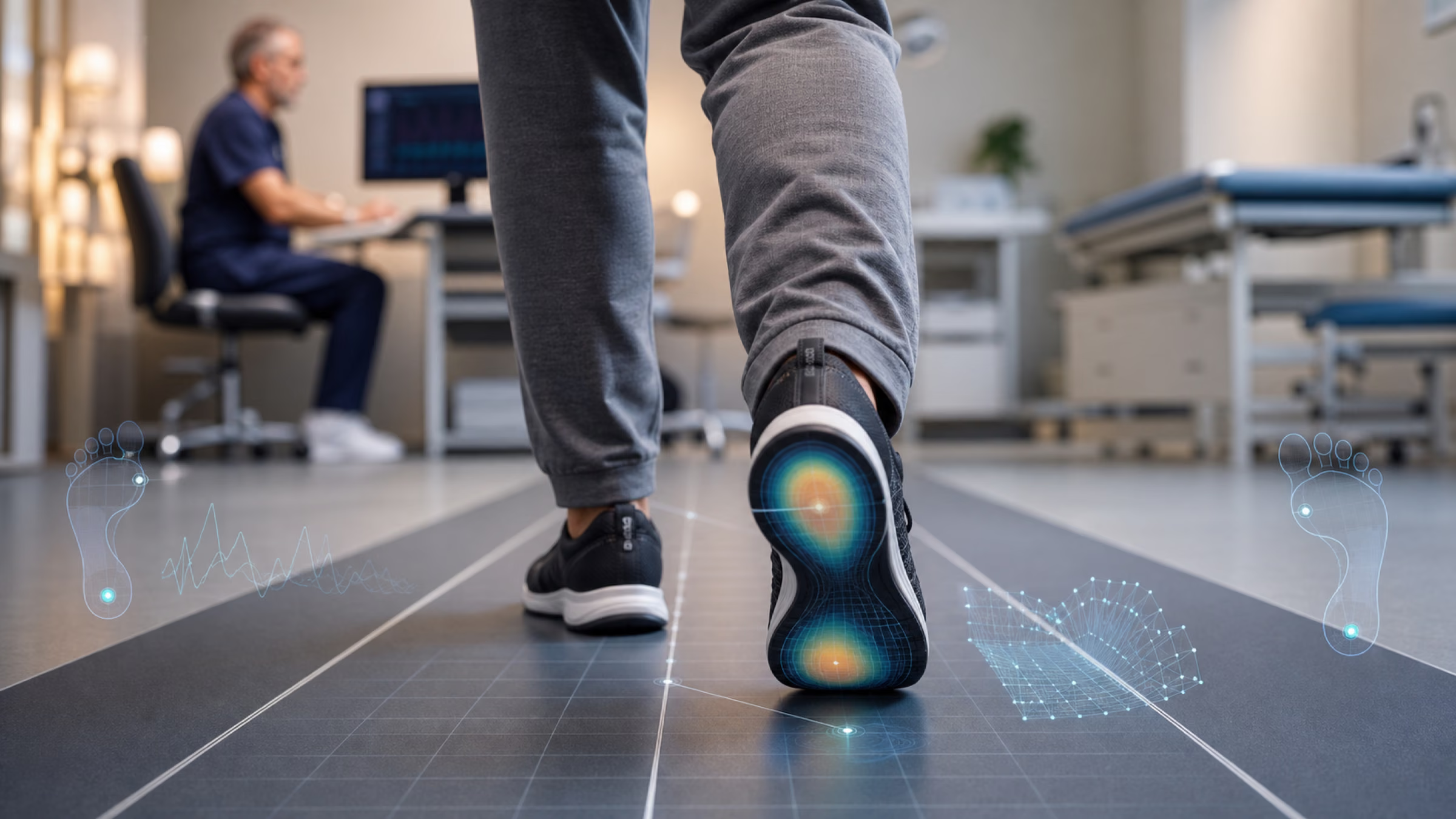
Evaluating whether routine in-clinic gait capture can surface the subtle spatiotemporal changes associated with diabetic neuropathy and metabolic dysfunction — a population in which lab-based assessment is rarely practical.
- Detected gait-pattern shifts associated with metabolic status
- Captured asymmetries relevant to neuropathy screening
- Demonstrated feasibility outside dedicated motion labs
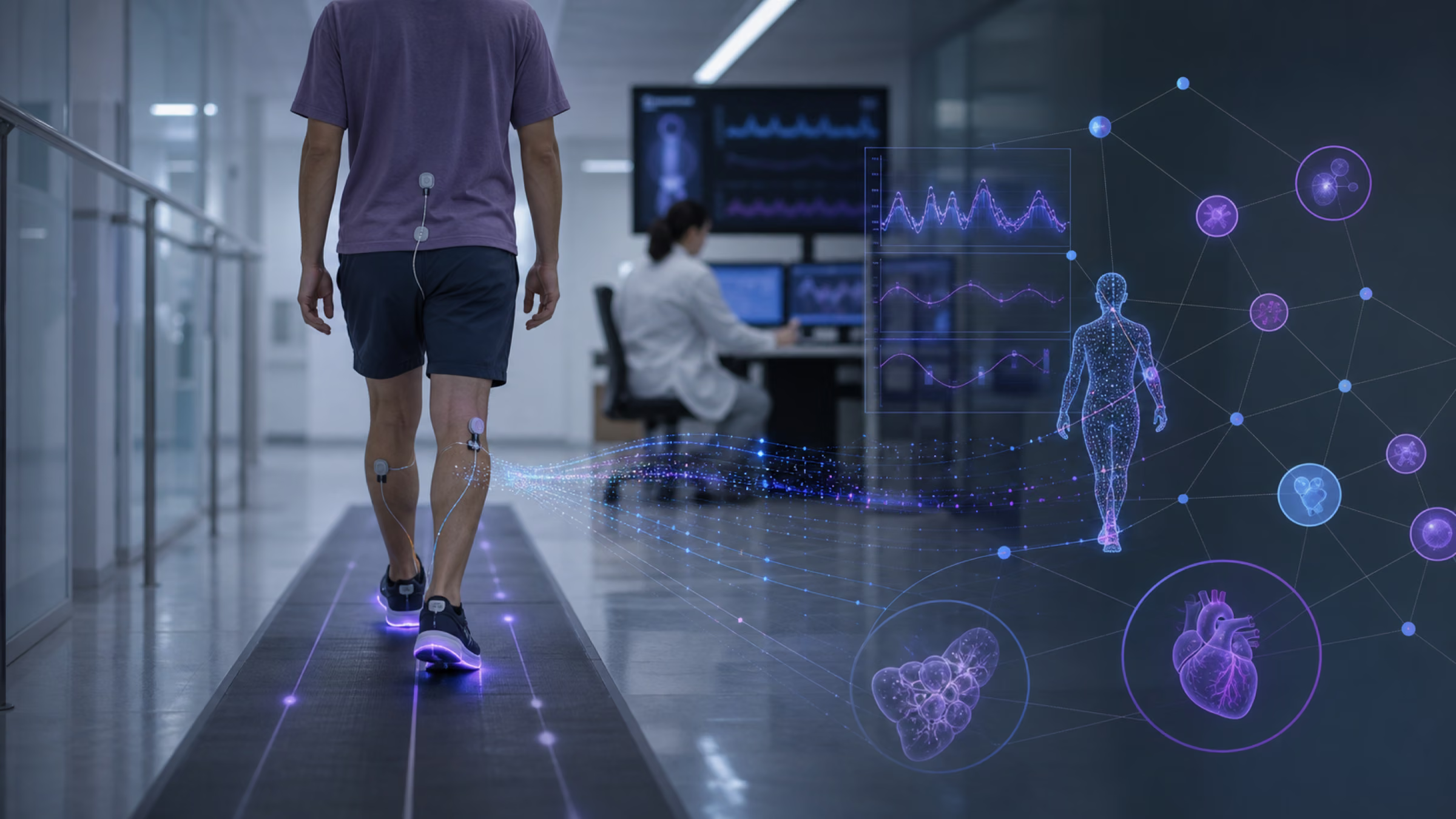
A novel application of in-shoe biomechanics to a non-traditional indication — exploring whether gait-derived signals carry predictive value for cardiometabolic complications in patients with schizophrenia.
- Gait features carried independent predictive signal
- Findings support broader use of motion data as a digital biomarker
- Opens a research pathway into psychiatry-adjacent monitoring
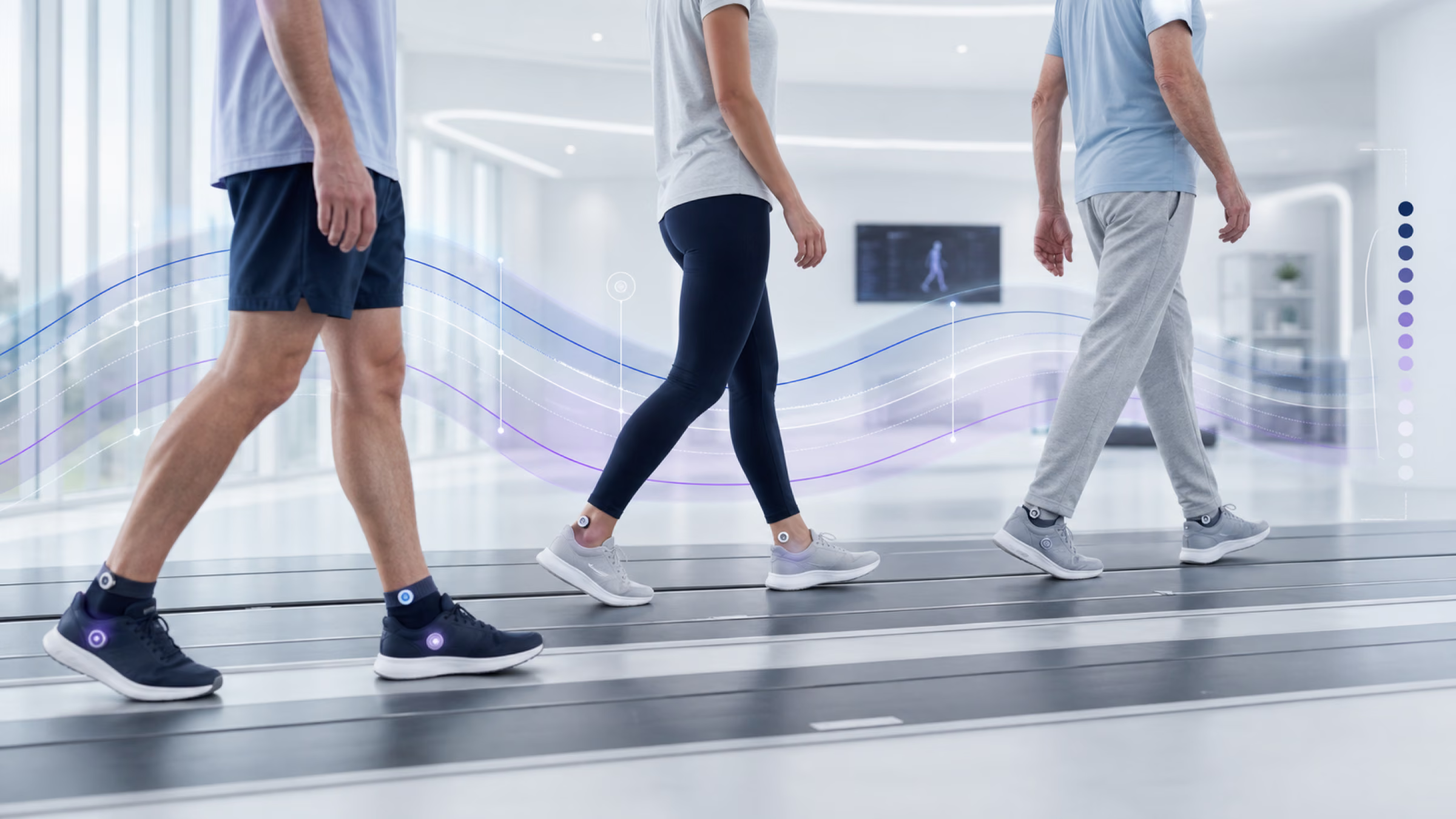
A normative-data study generating reference distributions for the platform's spatiotemporal outputs across adult age bands. The result is the population baseline against which individual patient sessions can be benchmarked.
- Age-stratified reference ranges for clinically relevant metrics
- Foundation for population benchmarking in Balia reports
- Supports mobility-decline screening in geriatric populations
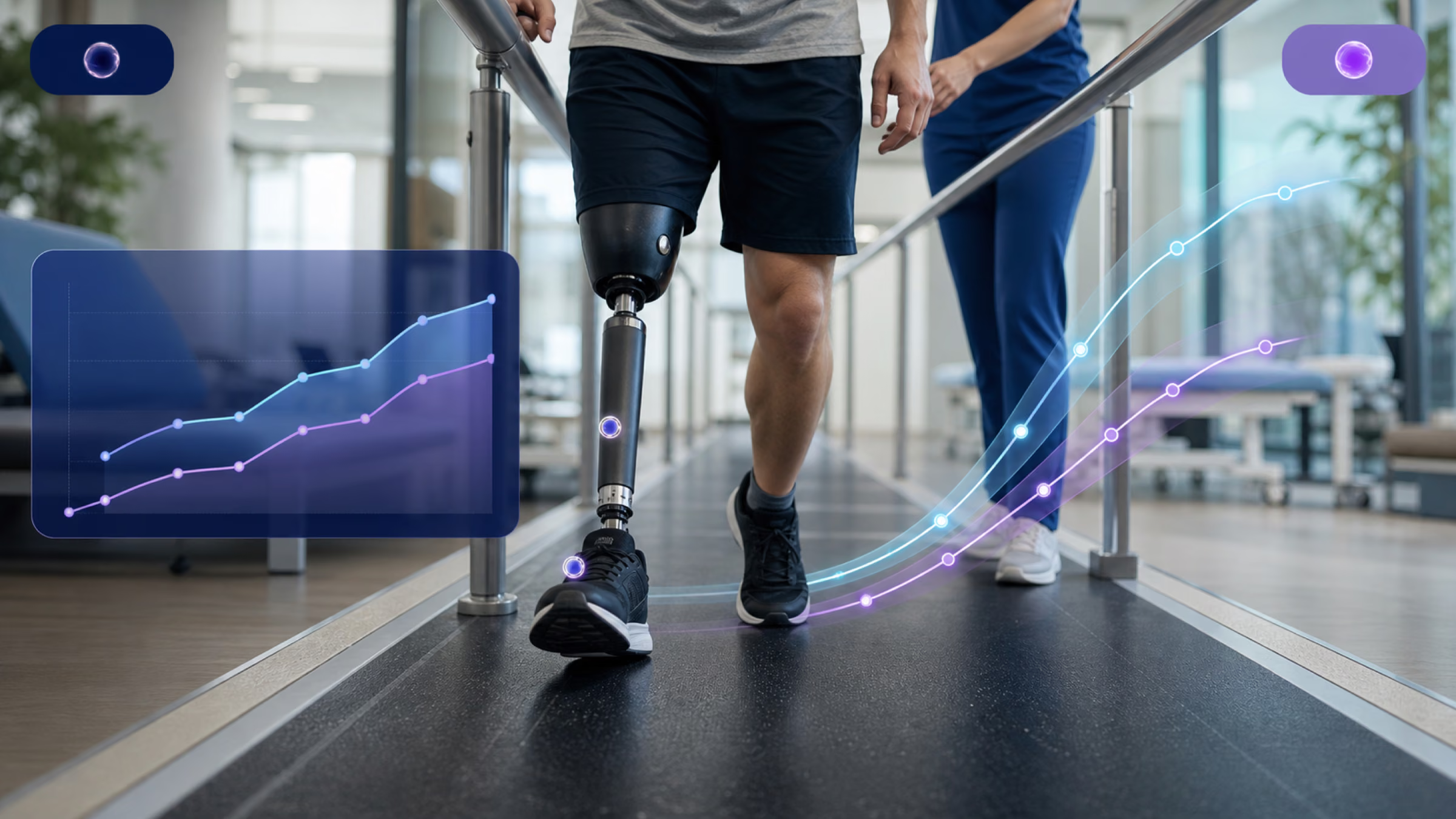
An interventional study using continuous gait capture to differentiate the recovery trajectories produced by two physical-therapy protocols — turning subjective progress reports into measurable, comparable curves.
- Detected differential recovery curves between protocols
- Continuous monitoring quantified progress between visits
- Demonstrates use of the platform inside structured rehab programs
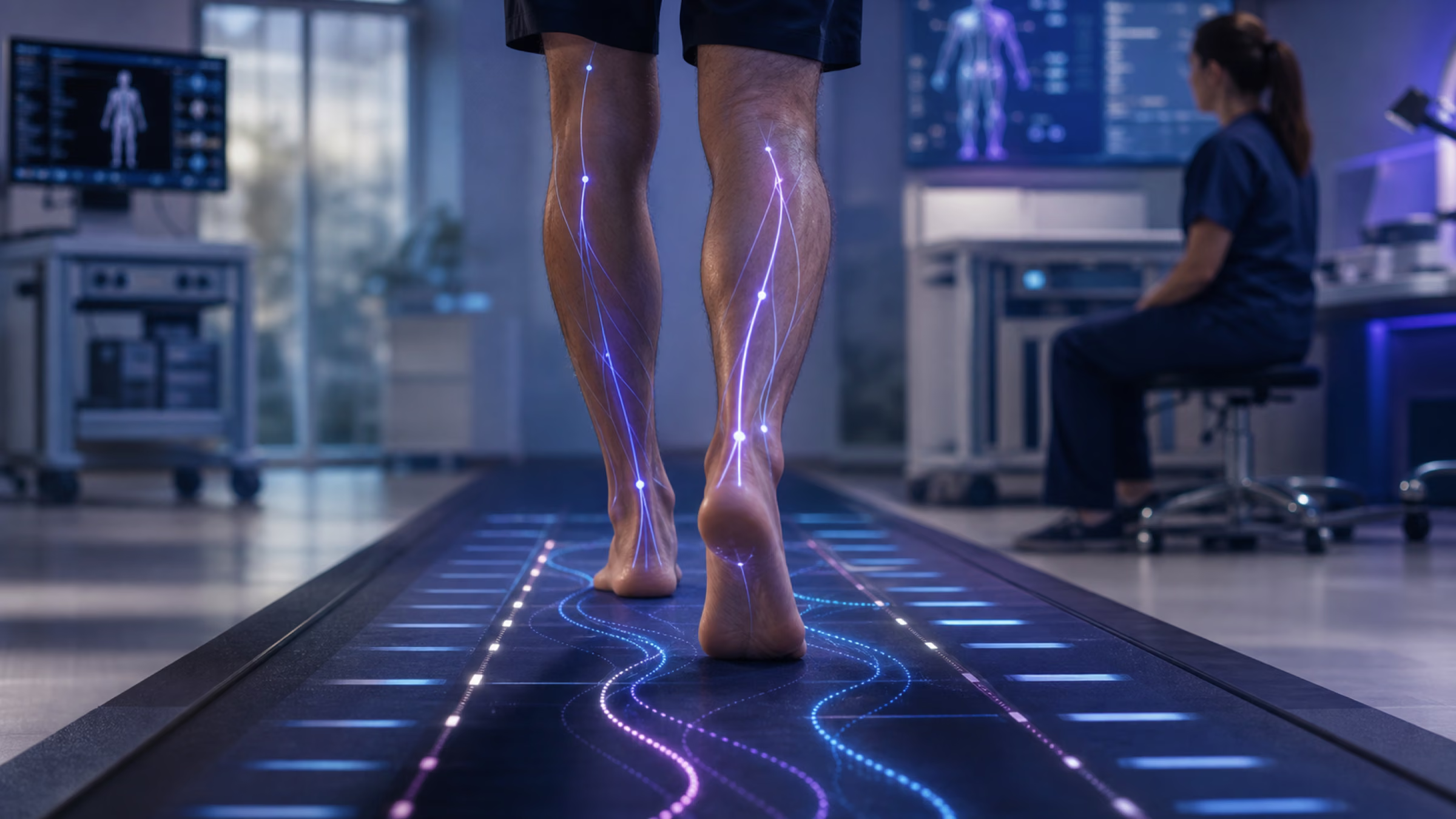
An early-stage exploration of how chronic venous insufficiency manifests in objective gait parameters. The pilot informed subsequent protocols for cardiovascular and lower-limb-circulation indications.
- Discriminating gait signatures identified between groups
- Foundation for further work in cardiovascular indications
- Presented to specialist clinical audience in Paris